
Last weekend, I went to Liangzhu Heritage Park and learned about the history of China’s human beings five thousand years ago.
Ancient Liangzhu history refers to a late Neolithic culture that was active in the Taihu Basin of the lower reaches of the Yangtze River from about 5300 to 4300 years ago.
It is considered to be direct evidence of the five thousand years of Chinese civilization and was listed as a World Cultural Heritage in 2019.
Before this discovery, China's five thousand years was just a myth. The confirmed historical starting point at that time was the late Shang Dynasty, about 3300 years ago.
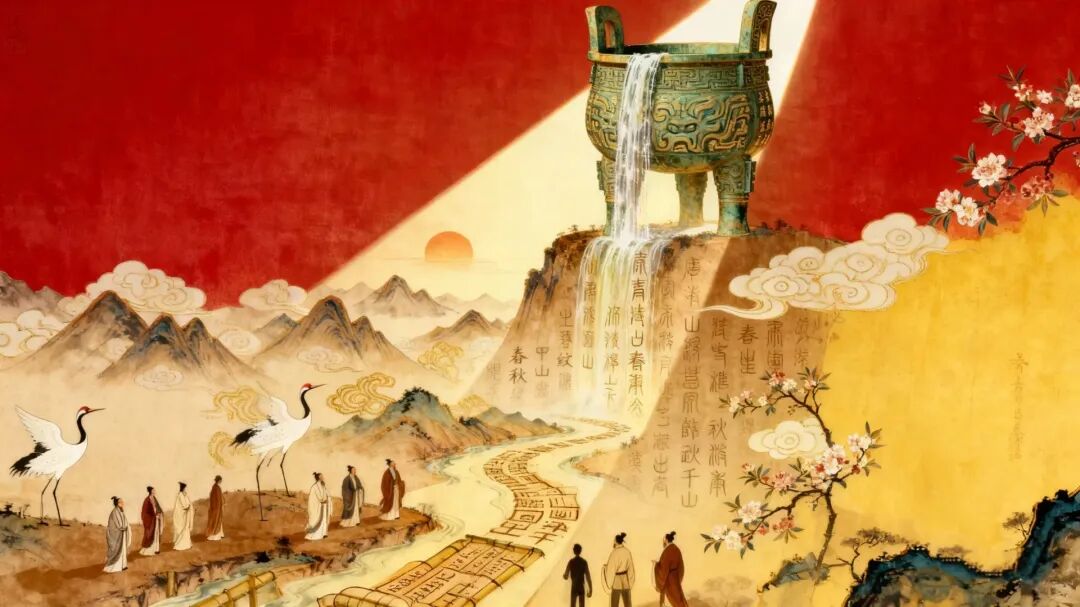
The previous concept of Chinese ancestors also originated from ancient records, which regarded Huangdi, Yandi or the "five ancient sage kings" Houji, Gaotao, Yushun, Tang Yao and Shangqi as their bloodline ancestors.
This is more of a national psychological identity formed after the Warring States Period, a "cultural phenomenon" rather than a rigorous historical fact. It is a cultural consensus formed through long-term historical development as recorded in ancient books such as "Historical Records".
So who are the ancestors of the Chinese people?
How did they develop step by step to where they are today?
Did they leave anything for us?
Hello everyone, I am Xiaozhe,
Let’s think about a question together today:
Who are the ancestors of the Chinese people?
01
Let’s not get ahead of ourselves. It has been scientifically proven that the Chinese people have five common ancestors, and most Chinese people are their descendants.
Based on genetic research on the Y chromosome, Dr. Yan Shi’s team at Fudan University found that about 60% of Chinese men’s paternal genes can be traced back to five “super ancestors” in the Neolithic Age.
By comparing the Y chromosomes of a large number of modern men, scientists can draw a huge Y chromosome evolutionary tree.
This common ancestor was discovered when it was discovered that mutations on the Y chromosome of many different branches of modern men could all be traced back to the same ancient man.
By counting the number of mutations and combining it with the known mutation rate, we can estimate the approximate age he lived in.
These five people lived about 6800-4000 years ago, which proves that the origin of the Chinese people is not mythical figures such as Huangdi and Yandi.
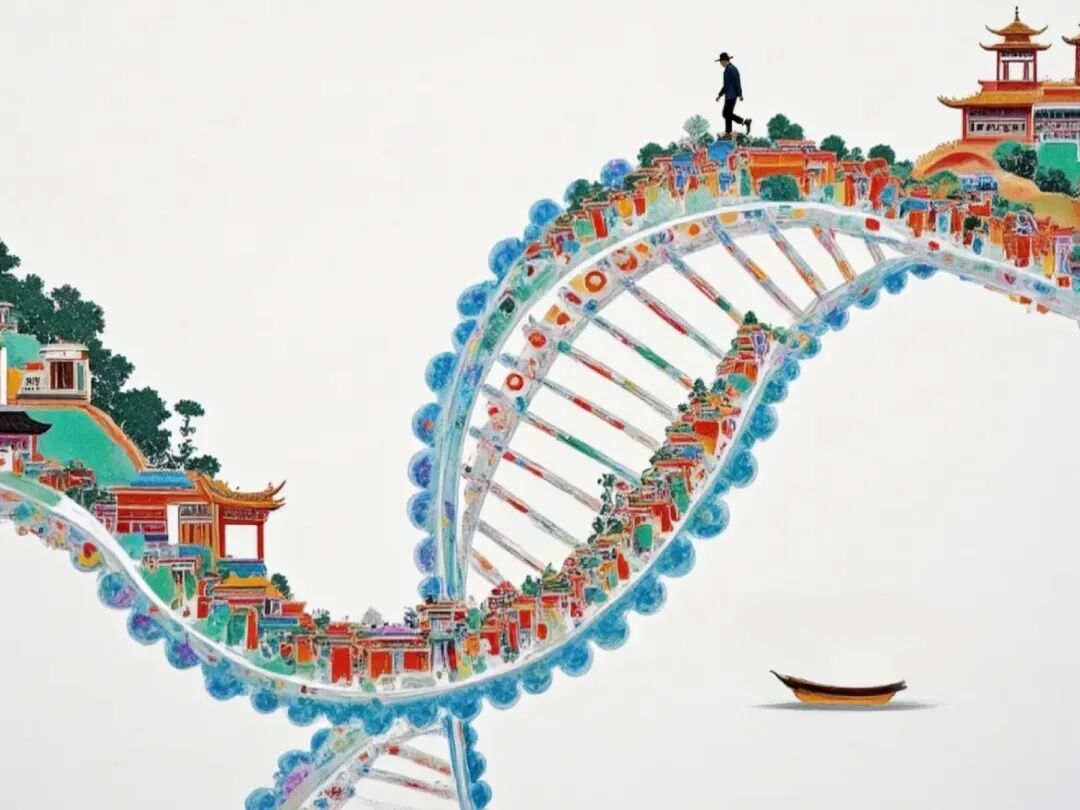
The proportion of "ancestral" genes with the most offspring does not exceed 16% of Chinese men, which means that the Chinese do not have a single ancestor. Everyone is basically a mixed race after migration and exchange between various tribes.
What’s even more interesting is that the active eras of these five ancestors discovered by science coincided with the heyday of Liangzhu, Yangshao, Hongshan and other archaeological cultures.
For example, the creator of the Liangzhu culture we just talked about may correspond to one of the Y chromosome lineages (such as Oγ).
02
The five super ancestors should be the leaders of five different tribes, which are distributed throughout mainland China. We use DNA as their code name to introduce them.
Oγ, the first protagonist in our story, was active in the middle reaches of the Yangtze River about 6,800 years ago.
Today, Chengtou Mountain in Lixian County in northwest Hunan, the earliest ancient city in China, may be his "royal city". The Gaomiao culture he belonged to worshiped the phoenix bird and the sun, and carved mysterious eight-pointed star patterns on the white and delicate pottery. After that, his descendants spread eastward along the Yangtze River and became one of the important creators of the later glorious Liangzhu culture. They built earthen platforms and carved jade congs on the shores of Taihu Lake.
Oβ, about 6,500 years ago, his tribe lived in the core of the Central Plains - today's Puyang area in Henan.
This is the hinterland of the Yangshao culture. His ethnic group made a living through millet agriculture and created colorful pottery with petal patterns that had great diffusion, which profoundly affected the vast surrounding area. Some archaeologists speculate that the owner of the Xishuipo Tomb, with its dragon, tiger and Beidou patterns carefully carved out of clam shells, may be him himself or his direct descendants.
Oα, he lived a little later, about 5400 years ago, and his location moved further north to the north and south of Yanshan Mountain, which is today's Chaoyang area in Liaoning.
The Hongshan culture he belongs to is famous for its grand "stone tombs" and exquisite jade articles. In the large pyramid-like tomb at the Niuheliang site, the owner of the tomb holds two jade turtles, one male and one female, with a jade jade pillow on his head and a cloud-shaped jade pendant on his chest. This may be one of his descendants.
Cα, its active area overlaps with Oα, and is mainly from the north and south of Yanshan Mountain to the Bohai Sea area. It is also an important participant in the Hongshan Culture.
His ethnic group may have lived a half-agricultural and half-herding life, and their character was more brave and fierce. In later history, some of his descendants integrated into China, while others spread to the northern grasslands and became one of the sources of many nomadic peoples.
N1 South, his home is in the Shandong hills on the lower reaches of the Yellow River. He is an important founder of Dawenkou Culture.
They have unique customs, such as removing the maxillary lateral incisors when they reach adulthood, placing "pottery balls" in the mouths of the dead, or using cane teeth, tortoise shells, etc. for burials, which shows that they have very different concepts and belief systems of ghosts and gods from those in the Central Plains.
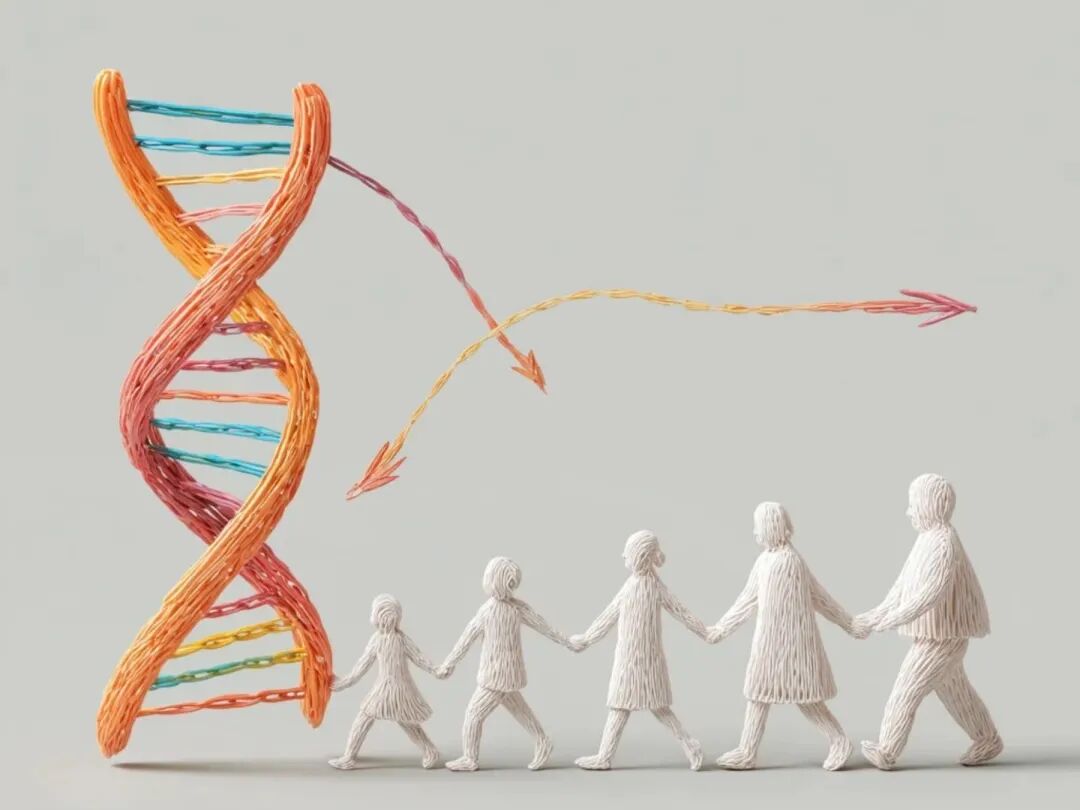
It is not difficult to find that the areas where these people live are concentrated in the north. Through the long history, the Yongjia Rebellion, the Anshi Rebellion, the Jingkang Rebellion... wave after wave of population migration southward has left the northern paternal gene deeply imprinted in the blood of southerners.
They multiplied, cultivated and worked, gradually forming this behemoth of 1.4 billion people.
03
You may ask, what does this long-ago history have to do with me?
About 90%-95% of Chinese people do not have body odor, while about 90% of white people have body odor, and the proportion of black people is as high as over 99%.
According to research, about 40,000 years ago, when our ancestors entered temperate Asia from tropical Africa, a small mutation occurred in the ABCC11 gene on chromosome 16.
The 538th base was changed from G to A. This mutation greatly reduces the secretion of apocrine glands, and the smell produced by bacterial decomposition is naturally reduced.
In addition, Chinese people have much fewer allergens than foreigners.
For example, peanuts are fatal to many Europeans and Americans. In China, although five-nut mooncakes have a unique taste, it is rare to hear of anyone being sent to the hospital due to allergies to five-nut mooncakes.
Other studies have shown that up to 77% of Han people carry the R-type mutation of the MAOA gene (commonly known as the "warrior gene"), while the proportion of Europeans is less than one-third.
This gene does not directly cause aggression, but allows people to deal with stress more effectively and show greater resilience and adaptability when facing challenges or adversity.
These are the gifts left to us by our ancestors through the baptism of history.
Knot
Argument
From this point of view, it is quite scientific and reasonable for Chinese people to worship their ancestors and not believe in religion since ancient times.
The blood of the five ancestors has flowed through thousands of years of history, and now it is passing through your and my heart.
It’s really incredible when you think about it.
But behind this long development is a very cruel process. In Chinese history, war, famine, and fleeing from famine are the norm. In extreme cases, people even ate Guanyin soil to satisfy their hunger.
This "eat what you have" way of survival is tantamount to a natural selection that lasted for thousands of years that gave us an anti-allergic constitution.
Our ancestors had to pick up their swords to fight the enemy and put down their swords to farm. This frequent role switching is gradually internalized and passed down from generation to generation in our genes, giving us strong psychological adaptability.
Our existence itself is a miracle that has lasted for five thousand years.
Our ancestors survived every war, every famine, and every migration. They do not know us, but they live for us.
And we are the continuation of their thoughts from generation to generation.
 Follow【Ask a question】
Master the latest trends and thinking in AI

Source: https://mp.weixin.qq.com/s/yBcQvKnBlqojeo_b9SRHUA